
Yes, You Can Play Golf at Home — Here's What the GOLFJOY Personal Golf Simulator Actually Does
Yes, you can absolutely play golf at home — and it's not as complicated or expensive as it used to be. The home golf simulator market has exploded over the past few years, and the technology has gotten good enough that a well-built home bay delivers a genuinely useful practice experience, not just a novelty.
If you've been on the fence about whether a home simulator is worth it, this piece covers what the GOLFJOY Personal Golf Simulator actually does, who it's built for, and what makes it different from other options in the market.
Why More US Golfers Are Setting Up at Home
The math on home simulators has shifted. Green fees at decent public courses in most US markets have climbed to $60–$100+ per round. Range time costs money. Lessons cost money. And none of it is available at 10pm on a Tuesday when you actually have time to practice.
A home simulator solves the access problem entirely. Thanks to more affordable simulator technology and a growing focus on home-based leisure, setting up an indoor golf bay is no longer just for the wealthy — it's becoming a natural extension of how people want to live. And beyond the lifestyle angle, there's a real financial case: a thoughtfully designed golf simulator room can boost a home's perceived value by anywhere from $30,000 to $75,000.
The GOLFJOY Personal Golf Simulator is built for exactly this shift — a permanent home setup that delivers real practice value and doubles as a genuinely fun way to spend time with family or friends.
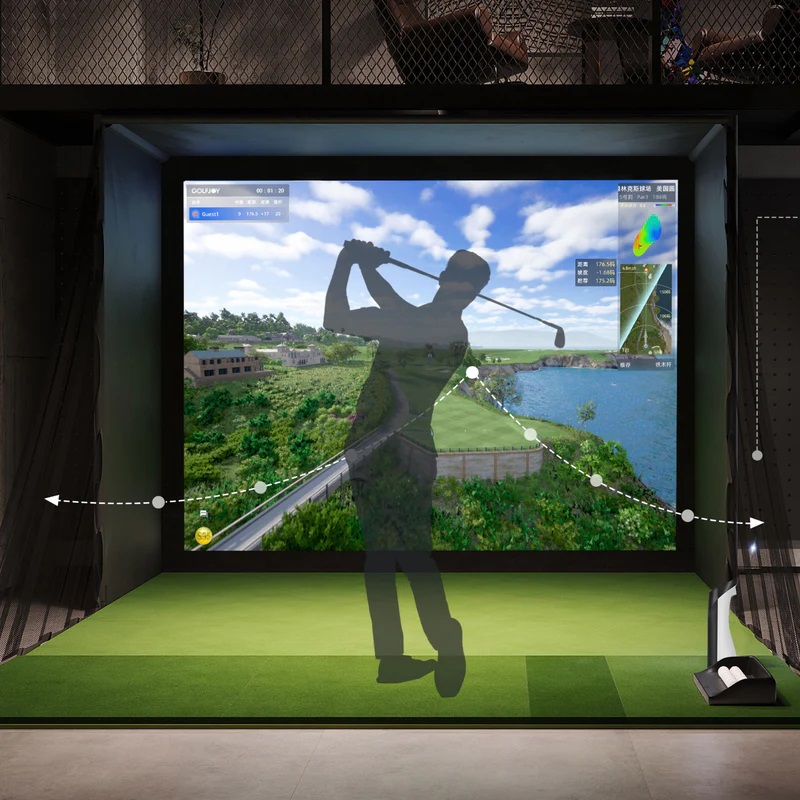
Camera-Based Tracking: Why It Works Better Indoors
One of the more important decisions when choosing a home simulator is the tracking technology. There are two main approaches on the US market right now: radar-based and camera-based.
Radar works great outdoors with more space. Cameras excel indoors with tighter tracking zones. This distinction matters a lot for home setups. Radar systems like the Mevo+ need meaningful depth behind the golfer to accurately capture ball flight — which is space most garage or basement bays simply don't have. Camera-based systems don't carry that same spatial requirement, which makes them a more practical fit for the compact footprints that most US home builds are working with.
The GOLFJOY Personal Golf Simulator uses high-speed camera tracking to deliver accurate ball data — speed, launch angle, spin rate, carry distance — without requiring the rear clearance that radar needs. If your space is tight, that's a significant practical advantage.
What You Get Out of Every Session
The core value of any simulator comes down to what it does for your game. Here's what the GOLFJOY system delivers in practice:
- Real shot data on every swing — ball speed, launch angle, spin, carry distance, and club path. Not estimates. Actual measured numbers from your actual swing.
- Course play on world-famous layouts — Course play on world-famous layouts — Pebble Beach and hundreds more. Playing a full simulated round on a course you know forces you to think about shot selection in a way that range balls never do.
- Practice modes beyond just hitting balls — Box Crush, closest-to-the-pin, longest drive, and targeted short game work. These modes matter because they make it easier to stay focused and actually enjoy solo practice sessions.
- Multiplayer — play a round with friends or family in the same room, or set up a friendly competition. This is consistently one of the most-used features among home sim owners in the US, especially for people who want to get non-golfers engaged.
The combination of real data and actual course play is what separates a quality simulator from just hitting into a net. You're not just keeping your swing warm — you're practicing with purpose and getting immediate feedback on every shot.
Works for Every Level in the Household
One of the underrated aspects of a home simulator is how well it handles mixed-skill households. Not everyone hitting in your bay is going to be a 10-handicap.
For beginners — kids, spouses, friends who've never played — the simulator removes the intimidation factor of a real course or a crowded range. You can take your time, experiment with different clubs, and see exactly what the ball is doing without any pressure. The data feedback actually speeds up the learning curve significantly compared to just going to the range blind.
For serious players, the depth of data and course simulation provides meaningful training value year-round. Golf simulators remove nearly all access barriers for players to grow their skills, and paired with occasional rounds outdoors to apply lessons learned indoors, it's possible we'll see the next generation of players who developed their games primarily on simulator gear.
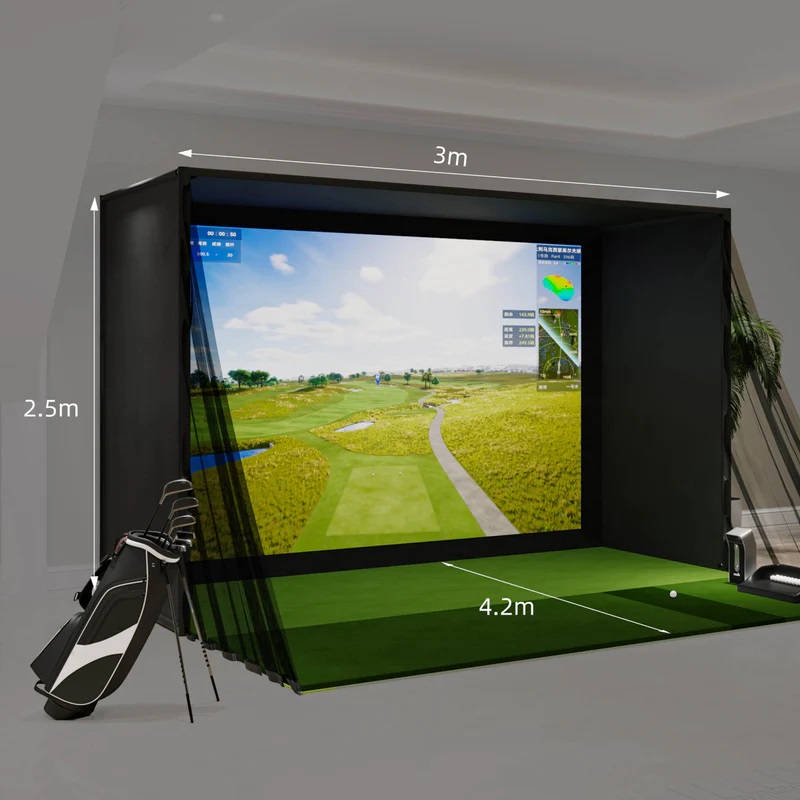
Space and Setup: What to Expect
The GOLFJOY Personal Golf Simulator is designed to fit standard home environments — garages, basements, and dedicated rooms. A functional setup doesn't require a massive footprint, but you do need to work within a few practical minimums:
- Ceiling height — at least 8.2 feet to swing a driver comfortably. 9.5–10 feet gives you more margin across all clubs.
- Width — at least 10 feet to give you room to swing freely and accommodate the screen enclosure.
- Depth — at least 14 feet from the hitting position to the screen for good image quality and ball flight visibility.
If you're not sure whether your space works, reach out before you commit — we'd rather tell you upfront than have you build a setup that doesn't perform the way you want.
Frequently Asked Questions
Do I need to buy anything else beyond the simulator system?
A complete home bay typically includes the simulator/launch monitor unit, an impact screen and enclosure frame, a projector, a hitting mat, and a PC to run the software. Some GOLFJOY packages bundle multiple components together. We're happy to walk through exactly what's included and what you'd need to source separately for your specific setup.
How accurate is it compared to hitting outdoors?
On a quality camera-based system like the GOLFJOY simulator, the core ball flight data — speed, launch angle, spin — translates directly to real-world performance. The distances you see on the simulator are genuine carry numbers from your actual swing, not software estimates. For club gapping and swing analysis, the data is reliable enough to make real decisions about your game.
What simulator software does it work with?
The GOLFJOY system integrates with established simulation platforms like GS PRO, E6 Connect, Creative Golf that used in the US market. Contact our team for the current compatibility list — software options and updates change regularly, so it's worth confirming before finalizing your build.
Is it hard to set up?
The system is designed for a manageable home installation. You don't need a specialist installer for a standard setup. If you're doing any room modifications — running new electrical, building a custom enclosure frame — you may want help with those specific pieces, but the simulator unit itself is straightforward to get running.
Ready to Build Your Home Bay?
A home golf simulator is one of those purchases that changes how you think about practice. Once it's in, you'll use it more than you expect — quick 20-minute sessions before work, full rounds on a rainy Saturday, putting competitions with the family. The access is the thing.
If you're ready to talk through your space and figure out the right setup, we're here.