
Why Your Driver Isn't Going Straight — And How a Launch Monitor Fixes It
You've been working on your driver for months. You've watched the YouTube videos, tried the tips your playing partners swear by, and still — the ball goes right, or left, or just doesn't go far enough. The frustrating truth? Without data, you're guessing.
A professional golf launch monitor doesn't fix your swing for you — but it tells you exactly what's broken so you can fix it with purpose. That's the difference between practice that works and practice that just kills time.

The Problem With Practicing Without Feedback
Here's what most golfers do: go to the range, hit 50 drivers, watch where the ball goes, make a feel-based adjustment, hit 50 more. They leave an hour later not knowing if they improved or just got tired.
A launch monitor breaks that cycle. With real-time data on ball speed, spin rate, launch angle, club path, and clubface angle at impact, you can see exactly what happened on every swing. Not roughly — exactly. That precision is what turns a frustrating range session into a productive training session.
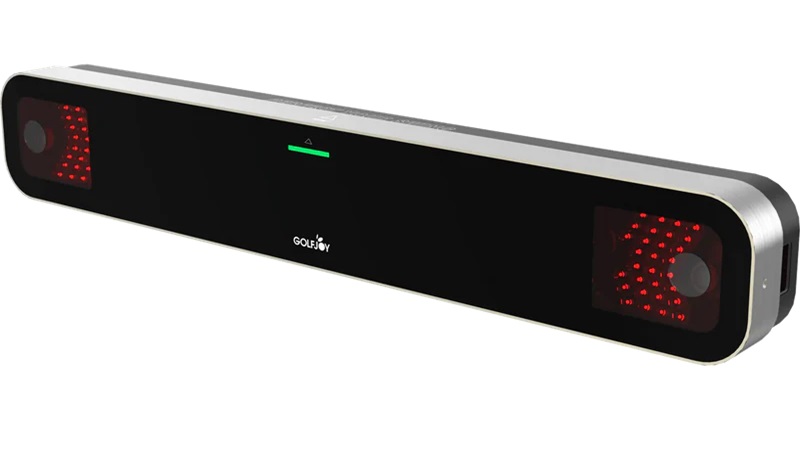
GOLFJOY's professional launch monitors capture this data immediately after every shot, so you're making informed adjustments instead of educated guesses. You see a clubface that's 3 degrees open at impact. You see a swing path that's 4 degrees out-to-in. Now you know why you're slicing — and you know what to work on.
Driving Accuracy: What the Data Actually Reveals
The most common driving problems — slices, hooks, inconsistent distance — all have specific data signatures that a launch monitor identifies immediately:
- Slice: Open clubface relative to swing path, excessive spin loft, high side spin
- Hook: Closed clubface, in-to-out swing path, too little spin
- Distance loss: Low smash factor, suboptimal launch angle, high spin rate for driver loft
- Inconsistency: Variable attack angle, inconsistent strike location on the face
When you can see these numbers, the problem stops being mysterious. Your coach can target it precisely. You can practice with a specific goal instead of just "hitting it better."
Practice Efficiency: Range vs. Launch Monitor at Home
Let's be honest about what a bucket at the range actually gives you:
- Visual ball flight feedback only
- No spin data, no launch angle, no clubface info
- No way to track progress session to session
- Weather-dependent, daylight-dependent, travel required
A GOLFJOY launch monitor at home gives you the opposite on every point. Every shot is fully measured. Sessions are logged so you can track trends over weeks and months. You practice in a controlled environment any time of day, any weather, any season.
For golfers in states like Michigan, Wisconsin, or Colorado where outdoor season is limited, this isn't a luxury — it's the only way to maintain real practice consistency through the winter.
Long-Term Progress Tracking: The Advantage Most Golfers Miss
Single-session data is valuable. Long-term data is transformative. When you can look back at three months of swing data and see that your average ball speed has increased from 142 to 151 mph, or that your average launch angle has gone from 9.2 to 12.1 degrees, that's measurable proof of real improvement.
GOLFJOY's monitors log your performance over time, giving you trend data that shows what's working and what still needs attention. That kind of long-term visibility is what serious players and their coaches use to make smart training decisions — not just feel-based guesses.
The Bottom Line
If your driver has been a problem for months and nothing seems to fix it, the issue probably isn't your effort — it's the lack of feedback. You can't fix what you can't measure.
A professional launch monitor from GOLFJOY gives you the data to identify the real cause of your driving problems, make targeted corrections, and track your progress until those corrections stick. Stop guessing. Start knowing.