
Best Personal Golf Launch Monitor for Home and Range Use: GOLFJOY Spica 3
Not long ago, launch monitors were locked behind a $10,000+ price tag and only showed up during a lesson with a PGA instructor or a fitting session at your local golf shop. That's changed. Launch monitors are now available at just about every price point, all the way down to a couple hundred dollars — and a lot of them are genuinely good. The result is that more US golfers than ever are practicing with real data instead of just guessing.
The GOLFJOY Spica 3 is a personal launch monitor built for golfers who are done practicing blind — whether that's at the range, at home, or in a simulator bay. Here's what it does, who it's built for, and why the data it provides actually matters for your game.
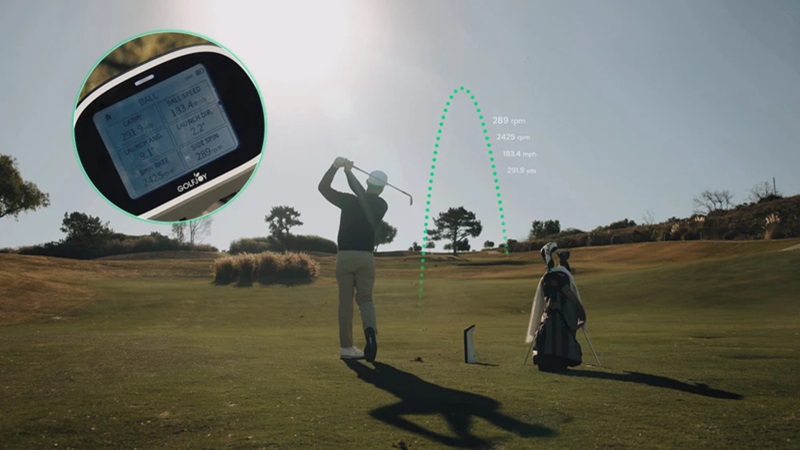
Why US Golfers Are Moving to Data-Driven Practice
Here's the honest reality of how most weekend golfers practice: they show up to the range, beat balls for an hour, and leave without knowing what actually changed. It's not bad effort — it's just incomplete feedback. You might groove a swing flaw as easily as you fix one.
According to golf pros, the most important data points for amateur improvement are club path, face angle, and attack angle — with path being the top priority. Many golfers don't realize their face is open 12 degrees and they're coming over the top, which is exactly why they slice. A launch monitor puts that information in front of you after every swing instead of leaving you to guess.
Amateur golfers are increasingly adopting data-driven training approaches, and the development of more affordable and user-friendly launch monitors is driving this shift. The Spica 3 is squarely in that category — professional-level insight at a price point that doesn't require you to be a tour player to justify it.
What the Spica 3 Tracks
The Spica 3 captures 27 data metrics covering every aspect of your swing and ball flight — giving you a complete picture of what's actually happening at impact:
- Ball speed — the most direct measure of how efficiently you're striking the ball
- Clubhead speed — your raw power input; paired with ball speed, this tells you your smash factor
- Launch angle — critical for optimizing distance with every club, especially the driver
- Spin rate — the data point that explains why your ball does what it does in the air
- Club path and face angle — the two numbers that directly explain curve and shot shape
- Carry distance — actual carry, not estimated, so you finally know your real yardages for every club
That last point is more valuable than most golfers give it credit for. A significant number of amateur golfers are carrying the wrong clubs into greens because they're working off estimated distances that have never been verified. Ten minutes with a launch monitor fixes that problem permanently.
Three Ways US Golfers Are Using the Spica 3
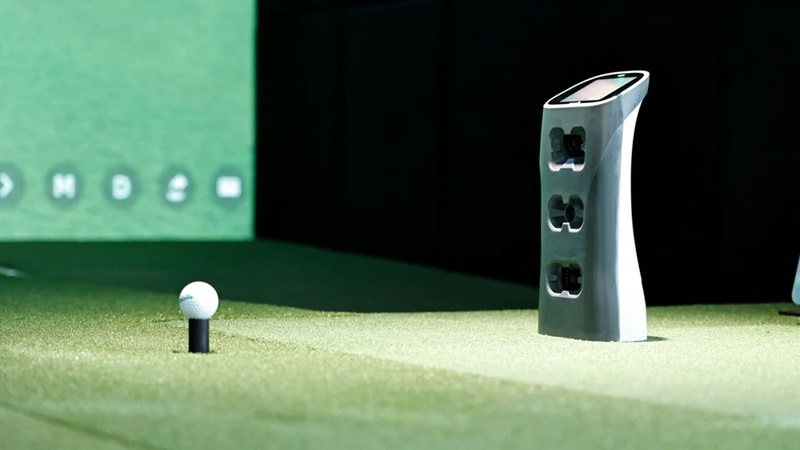
At the range — At the range — Just set it on any flat surface near your hitting zone — no mat required, no fixed positioning. Hit your normal session and review data after each shot or in batches. You'll identify patterns in your misses within a single session that a mirror or video wouldn't catch as quickly. Club path tendencies, face angle at impact, how your numbers change under fatigue — all of it becomes visible.
In a home simulator bay — The Spica 3 integrates with simulation software, so it functions as both a training tool and the engine for your home simulator setup. You get accurate data capture on every shot while also being able to play courses and run practice scenarios. For golfers building a home bay, pairing a reliable personal launch monitor with a quality screen and projector setup is the standard approach in the US market right now.
Pre-round warm-up and club fitting — Knowing your actual launch conditions with each club lets you make smarter decisions on the course. Which iron are you most consistent with from 150 yards? What's your actual gap between your 52 and 56 degree wedges? The Spica 3 gives you answers you can trust.
How It Compares to the Market
Every golfer is going to look for something slightly different in a launch monitor. A scratch golfer grinding to dial in wedges to the nearest yard needs accuracy above everything. A 15-handicap who gets bored at the range wants something easy to use with features that make practice more enjoyable. Someone setting up a garage simulator needs to make sure it works with their simulator software of choice.
The Spica 3 is built for the middle and upper tier of that range — golfers who are serious about improvement and want comprehensive data, but don't need to spend $15,000 on a Trackman to get it. It delivers the core metrics that matter for swing analysis and course management at a price point that makes it viable for dedicated amateurs, club fitters, and coaching studios.
For comparison, the US personal launch monitor market currently includes:
- Budget tier ($200–$700) — Rapsodo MLM2Pro, Swing Caddie SC200; good for basic distance tracking and casual sim play
- Mid tier ($700–$5,000) — SkyTrak, GOLFJOY,Bushnell Launch Pro / Foresight GC3; the sweet spot for serious home setups
- Professional tier ($5,000+) — Trackman, Foresight GCQuad; used by tour players and high-end fitting studios
The Spica 3 is positioned to deliver mid-to-upper tier accuracy and data coverage, making it a strong option for golfers who've outgrown budget units and don't need to justify a tour-level price tag.
Frequently Asked Questions
Does it work outdoors at the range?
Yes. The Spica 3 is designed to be used both indoors and outdoors, so you can take it to the range or use it in your simulator bay without needing separate equipment for each environment.
What simulator software is it compatible with?
The Spica 3 integrates with established simulation platforms used in the US market. Contact our team for a current compatibility list — software integration details can change with updates, so it's worth confirming before you build your setup around it.
Is it accurate enough for club fitting?
For self-fitting and gap analysis — identifying distance differences between clubs, optimizing launch conditions, confirming shaft performance — yes, absolutely. For a formal fitting session you're charging clients for, confirm the accuracy specs with our team against your specific use case.
How does setup work?
The Spica 3 is built for straightforward setup without a lengthy calibration process. Place it in the hitting zone, connect to your device, and you're ready to go. No specialist installer required for a standard home or range setup.
Ready to Stop Guessing at the Range?
If you've been hitting balls without data for years, the first session with a launch monitor is a genuine eye-opener. You'll likely find out that some things you assumed about your swing are wrong — and that's exactly the point. The faster you get accurate feedback, the faster your game improves.